Wednesday, July 31, 2013

My last vacation for three years

Evening palm trees in Palm Springs. 

You know you’re a miser when you consider opting out of a free vacation with your family in favour of the week’s worth of income you forgo by choosing the holiday.

Last week I was faced with this dilemma when my dad offered me his spot on a family trip because he had to work. In the end, after weighing the pros and cons, I decided to go. (Most people would think this decision a no-brainer, but with law school on the horizon, I need every penny I can get.)

Hanging out with siblings.
And that is how I came to be here in the very sunny city of Palm Springs, California.

If you are a little misled like I was, you probably think Palm Springs is a coastal city with lovely beaches. In fact, it’s a city in the middle of a desert. Luckily, I found out the truth before I arrived, or I would have been extremely disappointed.

It seems a strange vacation destination, but I suppose most people come here looking for warmth in the winter. Not the Swartzbergs though — we decided to come at the height of summer!

This African girl has been living in Canada for too long because the baking hot temperature is nice for about five minutes at a time before it becomes overwhelming. Luckily, we have a swimming pool and air conditioning to help us cope.

Lest you think that I regret my decision you come, you should know this desert city does have its charms. These are best enjoyed in the early morning or late evening though.


On Saturday we discovered the place wasn’t as deserted as it appeared at midday; when we went out for dinner the downtown was alive and exciting. Restaurants and bars were packed, and shops were still open and busy with customers. At this hour it was more believable that stars like Marilyn Monroe and Frank Sinatra would have retreated here.

I have also been able to admire an architectural style known as “desert modernism” as I pass by homes worth nearly two million dollars on my early morning runs. These properties are landscaped with palm trees, various cacti, and colourful flowers that thrive in the hot dry climate.

One of the other highlights of our trip so far was an aerial tram ride up Mount San Jacinto. Unfortunately, the state park was closed because of the recent wildfires, but we were able to enjoy the view. And the best part? The temperature was about 30 degrees (Fahrenheit) cooler up there!

Other than that, I’ve been swimming and relaxing — something I won’t have any time for in a few weeks when school begins.

From above, Palm Springs looks like a desolate place. 
Enjoying the cool mountain air. 

Sunday, June 2, 2013

My Miracle Race


Mom and daughter before the race.

Yesterday I ran 21.1 kilometres in Whistler, British Columbia, and got a personal best, crossing the finish line in just under two hours. Today I can barely get up and down the stairs in my house without clinging to the handrails, but it was worth it.

I love running. I joined the cross-country running team in grade 11 because a friend encouraged me and I discovered that long distance running suited me. I’ve run ever since off and on.

At the time I didn’t really consider myself an athlete and I certainly wasn’t a sprinter, but I was stubborn enough to push through the pain and finish a long run. Also, I’m extremely competitive and so in team situations I easily became frustrated at others and myself. Since I’m not one of the elite racers, with running I’m basically competing against myself.

Sprinting to the finish after 21 km.
I run to stay fit, to stay sane (it’s a great stress reliever), and to have fun. And I sign up for races because I love the thrill of competition and because they keep me accountable in my training giving me something to work towards.

I ran my first half marathon — the Seattle Rock ‘n’ Roll Half Marathon — in June 2011. I finished in 2:04 and when I crossed the finish line I swore I’d never run another one. However, I quickly forgot the pain and signed up for the same race the following year. Unfortunately, I got shin splints a few months before the race and wasn’t able to run it.

This year, I signed up for the Whistler Half Marathon and tried to train very carefully, only increasing my distance every few weeks. Things were going well, and I ran two 18-km training runs and two 21-km training runs which both felt fairly comfortable. However, in the weeks leading up to the race my knees began hurting to the point where it was uncomfortable to walk.

I attribute the discomfort to a part-time job that requires me to be on my feet all day, but whatever the cause, I was worried I wouldn’t be able to run. In the week and a half leading up to the race I rested (except for work), iced my knees and took lots of Ibuprofen. I also asked my dad to give me a blessing. He blessed me that would be able to accomplish the goal I had been working towards as I ran the race responsibly.

I always get butterflies before a race, but this time I was extra nervous. However, when the race began I started strong and after a few kilometres didn’t notice the discomfort in my knee (probably dwarfed by adrenaline and other muscle aches).

The course was challenging with lots of hills, but it was also very beautiful. Whistler is a ski resort town nestled among majestic mountains, and so the scenery helped to make the run enjoyable.

Participating in a race with so many other runners always adds a charge of excitement. My mother and several other friends were among the crowd, and so was my dad who ran the 10-kilometre option. It’s so nice that running has become a family activity and that we can encourage each other in our training.
The most Swartzbergs we've had run a race together - St. Patrick's Day 5K.
Anyway, by the time I had about two kilometres to go, my legs were feeling pretty heavy but according to my calculations if I kept a steady pace I would accomplish my goal. I usually like to speed up for the last kilometre, but I didn’t have it in me until a lady told me there was 100 metres to go. Then I gave it all I had and sprinted across the finish line.

I finished with a time of 1:57:50 and came 314th overall. My average pace was about 5:37 per km, which I was pretty pleased with. And although it was still hard, I didn’t cross the finish line vowing never to run a similar race again, so that’s an improvement. I’m grateful that I was able to accomplish this goal, and now I plan to let my knee heal up and then get back to training for the next event!
The whole group from Saturday. Everyone finished!

Monday, April 15, 2013

From Journalism to Law


It’s official: I’m trading in my press pass for a power suit.

This fall I’ll be attending Brigham Young University’s J. Reuben Clark Law School in Provo, Utah; and, if all goes well, in just over three years I’ll be a lawyer!

Several things factored into this decision, which has been in the back of my mind for a while. First, I come from a long line of Jewish lawyers and I felt someone needed to carry on the family business. (I had Fiddler on the Roof’s Tevye singing “Tradition” in the back of my mind.) Second, lawyers earn more money than small town editors. Third, I kind of like school and I think studying law will be rewarding.

Obviously, you don’t just wake up one day and sign up for law school. I’ve been working towards this for a while. The first obstacle was the LSAT (Law School Admission Test), which is a challenging exam that tests your reading comprehension and logical reasoning skills.

Many prospective students take prep classes to conquer this test, but since I lived in Merritt I just studied on my own from preparation workbooks and practice exams. I had to be diligent and squeeze in as much study time as I could in between newspaper deadlines and city council meetings, but in the end it paid off. I wrote the test the day before I flew to Guatemala, which was a week after I moved back to Coquitlam. My overall score put me in the 85th percentile.

When I returned from Central America, I began the application process. This included writing personal essays, gathering letters of recommendation and requesting school transcripts. I sent applications to BYU, the University of Alberta and Dalhousie University (in Halifax).

In February I learned that I had been accepted to both the U of A and BYU, which I was pretty excited about. Choosing between the two was extremely difficult though — both had great law programs. I want to practice in Canada, so Alberta seemed like a good choice; however, my heart was leaning towards BYU so I followed those feelings. To return to Canada, I’ll have to write a few additional exams, but it’s doable.

(This week I received an email from Dalhousie that I was accepted there as well. Perhaps it’s better that the decision came late or I would have been agonizing even more about where to go. But, it’s rewarding to know that I had my pick of the schools I applied to.)

Now, I have a few months left to save up money for school before I move to Provo. I’m excited for the challenge ahead, and haven’t had time to get too nervous. I’m not sure exactly what kind of law I’d like to practice, but hopefully that will become clear as I learn.

During a communications class at BYU-Idaho, I remember someone saying that reporters were only slightly above lawyers on the scale of professionals that people love to hate. Hopefully all the angry letters to the editor I received have prepared me for the angry people I’ll encounter when I descend to the lowest rung as a lawyer.

Monday, March 18, 2013

Highlights of Toronto


As promised, here is the sequel to my Toronto travel post. The big city of Toronto offers lots to see and do, and I was on the go throughout my week-long stay. To give you a glimpse of some of the attractions I enjoyed, I’ve compiled a quick list of the highlights of my visit. Here they are in no particular order:

1. Casa Loma

Casa Loma is a huge gothic-style mansion that was built in 1911 by a man named Sir Henry Mill Pellatt. His family only lived in the home for about ten years (it’s a very sad story) and the Kiwanis Club turned it into a museum as early as 1937, which was very lucky for tourists like me since the city wanted to demolish the place. For a price, Robin and I were able to explore this building from top to bottom. We toured the tunnel that stretches under the street to access the massive stables, climbed the tall tower overlooking the city, and tiptoed up and down the secret staircases from Sir Pellatt’s study. We even gazed longingly at a lovely luncheon being served in the conservatory that we didn’t have tickets for. Casa Loma (which by the way means ‘house on the hill’) was one of the best parts of the trip. And it had a great audio tour.

2. CN Tower

Of course I visited the CN Tower. What kind of tourist would I be to visit Toronto and not check out the view from the top of the tower? The tower is 533.33 meters high and is considered one of the modern Seven Wonders of the World. We rode one of the glass elevators up to the observation deck just as the sun was setting and had a beautiful panorama of the city. We did spend a few moments on the outdoor platform, but it was so bitterly cold and windy up there that I got a brain freeze. We did not pay the extra $12 to see the world from a few meters higher in the Sky Pod — when you’re that high up already, I’m not sure it makes much difference (and I’m cheap).

3. Royal Ontario Museum

We had bought a City Pass, which included tickets to the Royal Ontario Museum as well as the first two attractions I described. I was quite impressed by the museum, but you really need a day or two to see everything (according to Wikipedia it’s the largest museum of world culture in Canada and one of the largest in North America). We only had a few hours and we spent too long exploring Asia (which had some really neat stuff) and had to race through the dinosaurs as well as ancient Egypt, Greece and Rome.

4. Kensington Market

The name is a bit deceiving since this area of town is more of a neighbourhood than a market, but the community includes an eclectic mix of shops and restaurants. We passed lots of cafes serving Latin American food (though there were plenty of other eats to be found as well), and lots of shops selling vintage clothes. We visited a few of the vintage stores, but my favourite discovery was Courage My Love. The vintage wear was authentic and the prices were good. They even had some pretty buttons that I couldn’t resist buying for my non-existent sewing project.

5. Distillery

The Distillery District is a great example of how Toronto mixes the old with the new. This historic area houses boutiques, galleries and restaurants in heritage buildings, which once made up the Gooderham and Worts Distillery. Interesting fact: in the 1860s, the distillery was the largest in world and produced over 2 million gallons of whisky. You can still buy alcohol here, but I opted for the chocolate instead. We sipped hot mugs of Mayan and traditional hot cocoa at a chocolate specialty shop called Soma, and I splurged and bought a really expensive bar of dark chocolate. 

6. Campbell House

Built in 1822, Campbell House is one of the oldest homes left in Toronto. It was built as a residence for Sir William Campbell and his wife, but over the years it housed various businesses and even served as a horseshoe nails factory. To save the building from demolition, the whole house was moved nearly 2 kilometres in 1972 and now serves as a museum. We had a nice little tour, which helped me learn a bit more about the early days of York (later Toronto). 

7. Fork York

Not far from Toronto’s downtown core is the historic site of Fort York, which served as a military fortification in the War of 1812. During our visit we walked through original buildings such as the soldiers barracks and a stone magazine and brushed up on some of our history. This war was an important one — the British colonists (who would later be Canadians) defended their land from American advances and eventually burnt down the White House.

If you’re still reading I’m impressed. I apologize that my “quick” list ended up being so wordy. I couldn’t help it. I had fun in Toronto and wanted to share my adventures. You may have noticed that I like history. There are lots of things to do in Toronto that have nothing to do with history, but I like to visit old places and buy old clothes.

Bonus highlight: I also visited Niagara Falls, which was as beautiful as the photographs. 

Wednesday, March 6, 2013

Toronto: An almost foreign city


In Grade 7 I visited Alberta on a choir trip. Until recently, that was the only time I had ventured past the borders of British Columbia to explore Canada.

Beyond Canada’s border, I’ve done a fair bit of exploring including visits to four different continents and at least 13 states within America, but it’s shameful that I’ve seen so little of the country that issues me my passport.

A few weeks ago though, I accepted an invitation to visit a friend and bought a plane ticket to the big city of Toronto. It felt strange flying domestic. They didn’t even check my ID until I was through security and boarding the plane.

After a four and a half hour flight, I got my first view of Toronto from above. It looked strangely similar to my first view of view of Russia eight years ago. Snow covered the ground and the rooftops and the city appeared cold and foreign.

This subway station only looks good because
someone (not me) took a cool photo.
My first task in this new city was to navigate the transit system from the airport to reach Robin’s home near downtown Toronto. He had given me clear instructions beforehand and reminded me that in Canada people speak English and it would be easy to ask for directions. (This boosted my confidence considering I had managed for a month in Central America with no Spanish.) I found the right bus, paid my fare, and managed to take the necessary subway transfers to reach his part of town.

Even though people accepted my Canadian currency, and looked and sounded Canadian, I still felt like I was in a foreign country for a few days. The subway stations seemed kind of old and dirty — they were built in the 50s and 60s and seem like they haven’t been re-decorated since then — which also reminded me of Russia.
This fancy old house is now a Mac's
Convenience store
.

However, as I explored the city, passed many Tim Hortons franchises, and even visited a T&T Supermarket, the city began to grow on me and feel much more Canadian.

For one thing, Canada is a cultural mosaic and I explored that aspect of Toronto through food. I ate Thai food, Indian food, Somalian food, Peruvian food, and even good ol’ North American food with a steak dinner at the Keg Mansion.

Toronto felt much older than Vancouver, because of course it is, but I loved that it was able to maintain a flavour of history in a bustling city. Brick buildings stand shoulder to shoulder with modern high-rises downtown and converted brick row homes house people and businesses.
More old houses lining Toronto streets.
I even grew to like the transit system despite it’s 60s décor. Three dollars got me from the airport to Robin’s place (no zones!) and one day pass worked for two people on the weekends.

Finally, the people seemed pretty nice too. Though that could just be because my interactions were limited to Robin’s friends and Mormon missionaries.

Coming Soon: Highlights of Toronto

Tuesday, November 20, 2012

Dreaming of Placencia from rainy Vancouver


Now that I’m back in rainy Vancouver where the clouds don’t break for days at a time, it’s hard to believe that not long ago I was here:


We had such varied experiences during our tour of Central America that it’s hard to pick a favourite spot or activity, but Placencia, Belize is certainly among the finalists.

The little village of Placencia is located on a peninsula about three quarters down the coast of Belize on the Caribbean Sea (a 15-minute boat ride from Independence).

To reach Placencia from Honduras, we caught a boat from Puerto Cortes. Actually, this was the one point of our journey that was not at all flexible since the boat only travelled in this direction once a week. The D-Express was much smaller than we imagined and crammed inside with our luggage wearing the life jackets they had given us, it wasn’t a pleasant ride. The destination, however, was worth it.


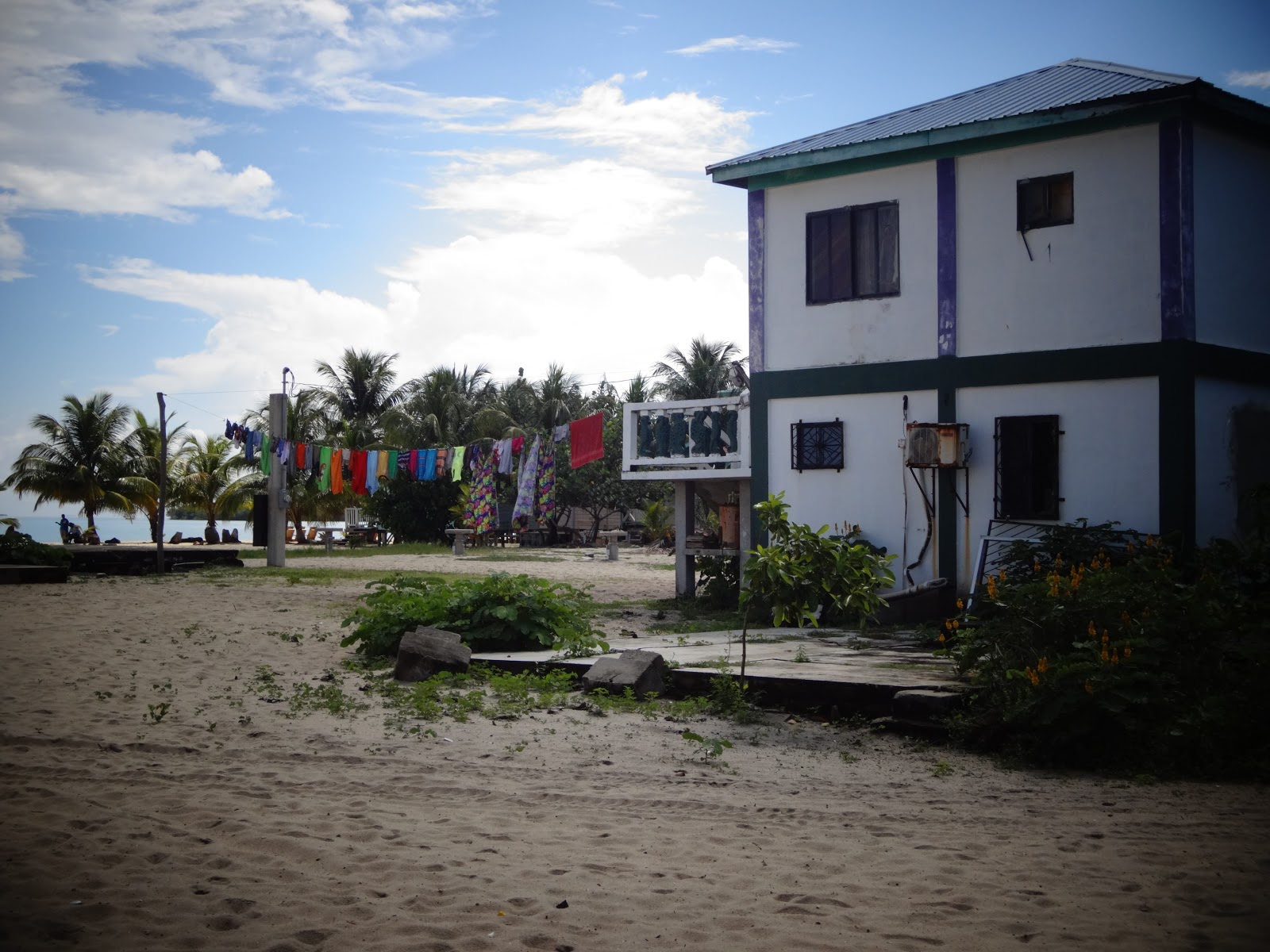
 The little town had a laid-back Caribbean feel to it and seemed to retain its natural charm while being very tourist-friendly. I even preferred it to the lovely island of Roatan, Honduras, which we had visited the week before.


We stayed in an inexpensive guesthouse called Deb and Dave’s Last Resort, which was clean and comfortable and only a two-minute walk from the beach.
           
Actually, you can walk anywhere in the town within a few minutes. Placencia basically has the main road and then a paved footpath running parallel to the road called The Sidewalk. Anything you need can be accessed by one of the two and there are brightly coloured markers everywhere that point you in the right direction.


There isn’t much else to do in Placencia besides spend time on the beach or visit the restaurants or bars, but it felt great just to relax. We even indulged ourselves and got pedicures, which we convinced each other that we needed after wearing our sandals for almost three weeks.


The one disappointment was that because it was low season, many of the recommended restaurants were closed. We didn’t even get to try the gelato that was apparently the best in Belize. (Actually, it seemed to be nearly impossible to find ice cream anywhere in Central America.) But we did try some nice Creole dishes and I managed to find some yummy papaya smoothies – my new favourite.

After a short stop in this tropical paradise we boarded the Hokey Pokey Water Taxi to the mainland and continued our journey. Of all the places we visited, I wish I could have spent more time there, especially now as winter approaches.


Wednesday, November 7, 2012

Jade and Chocolate


It has been extremely interesting to learn about the Mayan civilization. Their history of human sacrifice aside, the Mayans used cacao (cocoa) as money, drank chocolate during their wedding ceremonies and viewed Jade as their most precious stone, and these are things I can get behind.

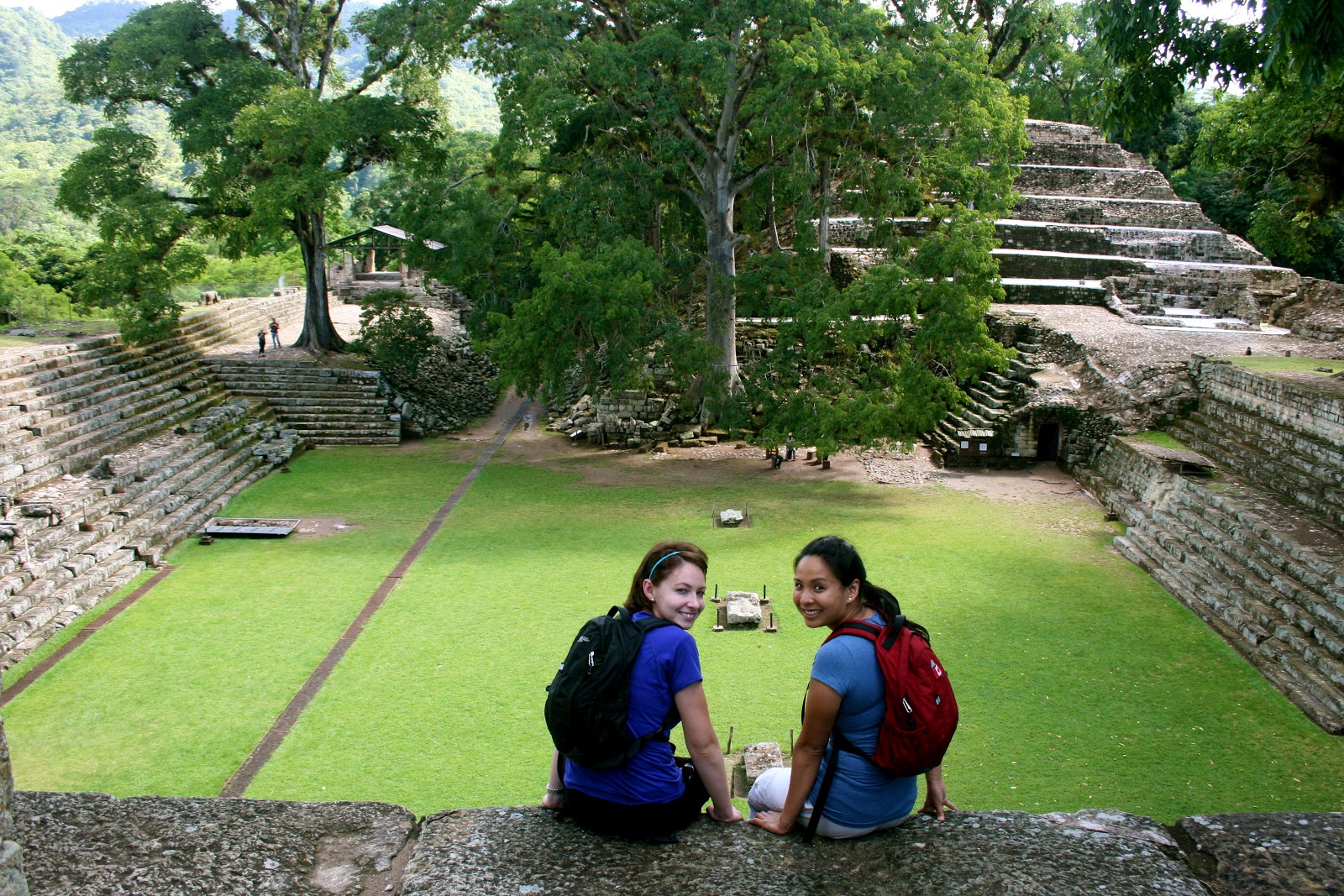
We got our first taste of Mayan architecture in Copan, Honduras. This site in western Honduras, not far from the Guatemala border, is considered one of the most impressive of all Mayan sites, not because of its size, but its legacy of craftsmanship.

We entered the site through the west court of the Acropolis and the sight of the stone temples, hidden behind the trees only a moment before, was rather breathtaking.

I’m normally quite a miser, but I happily paid the extra cash to get a guided tour of the site and it was worth it to have our own guide so that we could ask questions throughout the tour. I even paid the $15 extra to tour the tunnels, which allowed us to view the temples that have been discovered underneath the ones visible from the outside. (Apparently each new ruler would build bigger temples than the last ruler. Sometimes they would destroy the old temples and other times they built over top.)

We also learned about the Mayan ball game. Though it has been hard to decipher the rules, many archaeologists believe that the captain of the winning team was sacrificed at the end of the game — an honour to enter the afterlife.

These ancient sites are a history-lover’s playground and it was amazing to explore the site at our leisure after the tour and climb to the top of the temples that were open for climbing.

Closer to the tail end of adventure we also visited Tikal in Guatemala — a site that our guide book describes as possibly the most renowned of all Mayan ruins. Tikal includes several giant temple pyramids, the largest of which rises to 64 metres above the forest floor. Thousands of other buildings dot the landscape, many still covered by trees, roots and earth.

We had read that it was possible to book a sunrise tour and watch the sunrise from the top of the temples. So we booked a tour and were ready by 4:30 a.m. for our shuttle. In fact, the shuttle didn’t arrive until just before 5 a.m.

I hear in Guatemala you have to add half an hour to all time estimates and this is all very well, except that the sun doesn’t follow these rules. The sun rose as we travelled the hour journey to the park and it was light by the time we arrived. It didn’t seem like any other groups made it earlier and the park only opens at 6 a.m., so I guess it was just a case of false advertising.

Otherwise, the tour of was great. Our guide showed us the ruins and shared facts about the flora and fauna. He picked up a big, black tarantula and pointed out monkeys and a poisonous snake.

The temples were impressive and we climbed three or four including Temple IV, the highest in the Mayan world. It was also neat to see the temples that have not been uncovered yet. I would easily have mistaken them for hills covered in plants and trees.

I’ve always secretly wanted to be an archaeologist and exploring the ruins only renewed that desire. I’m just not sure I could handle working alongside the tarantulas and poisonous snakes we encountered in the jungle. So, for now, I’ll keep the Mayan culture alive by indulging in their favourite treat — chocolate.

Overlooking one of the courts in Copan.
The Lonely Planet apparently published the same jumping photo. (Tikal)
One of the temples in Tikal.

Friday, October 19, 2012

Getting from Point A to Point B


On our first chicken bus in San Salvador.

One of the most stressful parts of travelling is getting from Point A to Point B, and this particular adventure involves a lot of that. Sometimes we are on the go every other day.

We are also trying to find the cheapest way to get around (taking safety into consideration) so this can be quite challenging.

So far, relying on the Internet and guide books we have managed quite well and our travels have gone quite smoothly.

Our first journey on our own from Antigua, Guatemala to Santa Ana, El Salvador was the most stressful and we actually ended up in a different city from the one we set out for. First, we took a shuttle in the morning from our hostel in Antigua to the Tica Bus terminal in Guatemala City and we were quite pleased with ourselves because we managed to cut out a taxi ride by asking the driver to leave us there instead of the airport. We also booked our tickets to San Salvador without any problems and asked the bus driver to drop us off in Santa Ana as we had read that we should do.

We were making very good time when we got to the border and with a short wait where the security checked our ID against the bus manifest, we were through the border. Unfortunately we hadn't gone ten minutes when the police stopped the bus and began searching the luggage. Of course, we thought the worst having read all sorts of accounts about corruption in the police force and highway robberies. No one explained what was happening and if they had we wouldn't have been able to understand anyway. We were there for a very long time when we saw the police load a few bags onto their truck -- they appeared to be full of winter clothes -- and the bus was turned around and sent back to the border.

At the border, all the passengers were ordered out then after a while we were allowed to get back on. We waited for another 45 minutes after this not knowing what was happening and by now it was dark and we were worried about how we would get to our hostel. Finally, they told us to get off the bus and we were loaded onto a different bus from a different company also headed for San Salvador. Marie and I managed to communicate to the new driver that we wanted to be dropped off in Santa Ana. In the meantime we had met an American traveller -- the only other person who spoke English -- and asked if we could take a taxi with him to his hostel if for some reason they didn't stop.

They did stop in Santa Ana, but the Shell station was deserted without a taxi driver in site. There was no way we could get to our hostel, unless we tried hitchhiking which was obviously out of the question, so we got back on the bus for San Salvador. In the end it worked out. We went to the hostel with our new friend Aaron, and there was room for us all. We spent the next day touring the city with him and then we managed to find out way to our next destination, Copan, Honduras.

Beyond this one experience, we've taken a number of these coach buses as well as local chicken buses and taxis where we've had to, without any difficulty. The most expensive ride was a $46 bus ride from San Salvador to San Pedro Sula, but we got off in La Entrada and caught a chicken bus to Copan. The cheapest journey, which also got us the furthest, was a local bus from Copan to San Pedro Sula (about $7) followed by a bus to La Ceiba about ($5.50), altogether a journey of about six hours. Silly how the 15-minute taxi to our hotel cost $20.

Now we are in Roatan, Honduras -- a beautiful Island on the Caribbean Sea. We took a ferry to get here and have a few more journeys to go before we end back in Guatemala City. Wish us luck!

Sunday, October 14, 2012

Hanging out with Mormons and visiting catholic churches

This title seems appropriate since Marie is Catholic and I am LDS. Our interfaith friendship, which began in high school, has seen us through many adventures including hiking the Juan de Fuca trail, biking the kettle valley and camping on the beach near Forks, WA. The latest installment of The Adventures of Jade and Marie finds us backpacking through central America navigating new countries with our limited Spanish and our limited budget.
We first arrived in Guatemala City last Sunday and were greeted by my first companion from Temple  Square and her mother. (My mission continues to bless my life by offering me friends and places to stay throughout the world.) It was so nice to have locals take care of us the first few days. Sister zepeda's mom showed us around Guatemala City the first day and another former sister missionary Amelia Lopez volunteered to take us to Antigua on Tuesday.
In Guatemala City we visited so many cathedrals I almost lost count, though I think there were six. Most were very ornate with several chapels and statues, candles and worshippers. We also visited the. National palace and national theatre and had tours of both.
In Antigua - a beautiful colonial town with cobblestone streets and beautiful colorful buildings- we saw some more churches. In at least two cases, we visited the main restored chapel and then explored the ruins left from earthquakes years ago which gave us an idea of the enormity of the buildings pre-earthquake. That was fun - I always like a chance to explore ruins and touch really old things.
So far we have visited four cities: Guatemala City, Antigua, San Salvador and Copan, Honduras. Each has a central park or main square with a government building and, of course, a Catholic church. We visited a few churches in San Salvador and today in Copan we got to experience the old church as more than a museum when we attended mass. Though of a different faith, I appreciated the hymns and the love these people had for their Heavenly Father, so found common ground despite language barriers.
It's only been a week and there is so much more to share, but I'll try write more when I can and add photos when I have a computer instead of an iPhone.

Monday, August 20, 2012

Shakespeare and the Fat Dragon


A Vancouver summer is not complete without a rendezvous with William Shakespeare in a tent overlooking English Bay.

Each year Bard on the Beach, a professional Shakespeare Festival in Vancouver, produces up to four different Shakespeare plays, which are presented in tents against a backdrop of mountains, sea and sky in Vanier Park on the waterfront. And each year the Swartzberg girls try to make it to one of the shows.

This year we opted to see The Taming of the Shrew on the main stage, but first we decided to make an evening of it and went out for dinner in Vancouver.

By recommendation we went to Fat Dragon Bar-B-Q, which serves southern barbeque inspired food mixed with Asian flavours.

Dodgy looking street.
While I claim Vancouver as my home when I’m beyond the borders of British Columbia, I’m actually from Coquitlam, which is why I didn’t blink an eye when I looked up the restaurant and saw that it was on Powell Street in the Strathcona neighbourhood.

When we pulled up in front of the restaurant we were all a bit taken aback. The neighbourhood seemed quite dodgy with gated old storefronts, rundown apartment buildings and scruffy people smoking from chairs on the sidewalk. Others pushed shopping carts loaded with pop cans and beer bottles.

"Green Graffiti"
We were meeting Robin for dinner and had arrived a bit early so we hesitantly decided to go for a walk around the block. We found a park dotted with homeless people napping on blankets, though there were some children and families playing at the playground. We also saw a fascinating example of “green graffiti” where people grow flowers, herbs and vegetables from a flowerbed on the wall.

At the appointed time we went into the restaurant, fully expecting it to be a dingy little place matching the neighbourhood in which it was located. Instead we found a lovely clean space with brick walls, lit by lanterns and candles. It was a bit disorienting actually coming in from the street, but what a pleasant surprise! And the food was just as nice. We had little steamed buns stuffed with beef/squash/squid, chicken lemongrass soup, lamb ribs, sweet and sour ribs, smoked pig’s snout fried rice, and a delicious mango rice pudding.

Inside the restaurant.
With full tummies we continued on to our evening of Shakespeare and enjoyed an energetic performance of The Taming of the Shrew. This production set the play in the Empire period with costumes of the same historical period and a set inspired by a pastoral landscape. However, the peace of the landscape was juxtaposed with the war of words and wits we saw played out between Kate (the shrew) and Petruchio (the man who volunteered to marry her and tame her for the sake of her dowry).

 It’s an interesting play really, which actually feels a bit uncomfortable when viewed through modern lenses. In the end, Petruchio “tames” his new bride to the point that this previously free spirit defers to him even when he claims the moon is the sun and she makes a big speech about how wives should obey their husbands.

It doesn’t need to be uncomfortable though. In my opinion, through their exaggerated relationship, we learn about compromise. Petruchio uses his outrageous tactics to show Kate that it is better to play with him than against him and in the end they are partners and she seems happy. Also, though Petruchio’s initial motive was money, it appears that he sees the potential in her that no other man saw and falls in love with her.

You probably didn’t come looking for a literary/theatrical analysis, but there you have it. Today’s “Journey with Jade” took you into the world of Will Shakespeare.

On a somewhat related note, I have decided that Baptista’s strategy to marry off his eldest daughter is a good one. My younger siblings will not be allowed to get married until I do (except for Kent who cheated and got married while I was a missionary.)

Sunday, August 12, 2012

Road trip to Lake Louise


For me, travel is usually about the destination. I don't really like flying and long car rides don't really appeal to me. And yet, all these I endure for the joy of visiting a new place.

However, a semi-spontaneous trip on the B.C. Day weekend was about the journey as well the destination (considering we were only there for just over 12 hours).

On Sunday afternoon (after I returned from a conference in Kelowna) Robin and I packed some overnight bags, stocked the car with a good supply of munchies and set out on a road trip to Lake Louise, AB — a northeast journey of just over six hours.

We knew it was a long way to travel for a very short visit, but saw it as an opportunity to see (if briefly) the many little B.C. towns along the way.

We passed through Kamloops, Chase and stopped for dinner in Salmon Arm, which was bigger than I had imagined it to be. Salmon Arm, located on the shores of Shuswap Lake has a population of about 17,000 (compared to Merritt’s population of about 7,000). We drove around for a bit trying to decide where to eat and made a lucky find. We found a restaurant called the Wicked Spoon — a café/grill with a delightful assortment of fusion dishes. I had a lamb burger – a lamb patty served on naan with feta, olives, red onion and tzatziki — and Robin had their dinner buffet, which included salmon so we got to sample some salmon in Salmon Arm!

Once we were full we continued the journey through a little town called Canoe, which most people have probably never heard of before, and on through Sicamous, Revelstoke and Golden. On the way we passed a few interesting attractions, which we made note of planning to visit on the return journey the next day.

Our hostel the HI-Lake Louise Alpine Centre.
We finally reached our destination at about 1 a.m. local time (I may have dozed for the last few hours of the journey) and located the hostel we had looked up on the Internet — the Hostels International-Lake Louise Alpine Centre. Luckily we thought to reserve a spot, so although we got there well after the quiet hours, there were two spots left for us — one in a boy’s dorm and one in a girl’s dorm.

I had to quietly sneak into bed and didn’t get to appreciate the hostel until the morning when the sun came in through the window. It was a cozy little room that housed up to five people with a bunk bed on the bottom floor and three beds in loft bedroom accessible by a steep wooden staircase. It was nice and clean and I didn’t even have to wait for a shower. While I got ready in the morning I chatted with one of my roommates — an Irish girl named Louise as luck would have it — who suggested we visit the Lake Louise Ski Area for a ride up the gondola and breakfast, so we did.

View of the Rockies from the mountain.
The ride up the mountain in an open-air chair cost $27.75, but for only $2 extra, we enjoyed a buffet breakfast at the bottom in the lodge. Those who know me and my miserly ways will understand this was a deal too good to pass up. The breakfast was decent, but the view from the top of the mountain was spectacular. We saw a real life panorama of the majestic snow-capped Rocky Mountains and nestled in a valley was the icy blue waters of Lake Louise.

We enjoyed the view for a spell, visited a Wildlife Interpretive Centre and then descended the mountain. What an experience to be suspended in the chair lift surrounded by so much beauty and silence — definitely worth the long car ride the day before.

Robin by the lake.
Seeing the lake from the top of the mountain was not good enough, so naturally that was our next destination. Apparently it was also the destination of thousands of other people. We eventually opted to pay for parking at the Chateau Lake Louise instead of driving in circles waiting for a spot in the public lot.

The lake was lovely and painfully cold as I discovered when I dipped my feet in the clear blue water. I would have loved to go hiking around the lake — there are plenty of trails in the area — but our tight schedule wouldn’t allow it.

Inside the chateau we learned a little bit about the history of the lake, named after Princess Louise Caroline Alberta, fourth daughter of Queen Victoria, and of the chateau, which evolved from a log cabin built as a day lodge for visiting mountaineers. From the beginning it seems the area was meant for a tourist destination and the Canadian Pacific Railway imported Swiss guides to develop the extensive trail system. And the tourists have never stopped coming.

I would have loved to dine at one of the chateau’s many restaurants overlooking the lake, but after a brief tour it was time to hit the road.

This is where we enjoyed a delicious
high-noon tea (in my dreams).
On the return journey we stopped to visit a Merritt friend and his wife in Golden, where I had crème brulee for lunch at a pleasant place called the Whitetooth Bistro and then continued on with plans to visit some of the previously noted attractions.

Unfortunately, the journey between Golden and Revelstoke (about 150 kilometres) took us nearly four hours because of an awful traffic jam. It was really terrible to be crawling along so slowly for so long along the two-lane highway. At one point, cars travelling the opposite direction near Rogers Pass were stopped completely and people were standing beside their vehicles or sitting in the road. We began to suspect a Zombie Apocalypse and didn’t know if we were heading towards it or away from it. Later we learned a car accident was the real cause of the jam.

The delay meant we had to pass up the Three Valley Gap heritage ghost town, as well as The Enchanted Forest. Though we didn’t have time for it, we briefly stopped at the Craigellachie historic site — the place where they drove the last spike of the transcontinental Canadian Pacific Railway on Nov. 7, 1885. It was dark and rainy, but I couldn’t pass up stepping foot on a historic spot and I didn’t want that traffic jam to steal all the fun.

We eventually spotted the familiar lights of the Nicola Valley close to midnight, and I was grateful for my own bed when I reached it, but I was pleased with our adventure.